

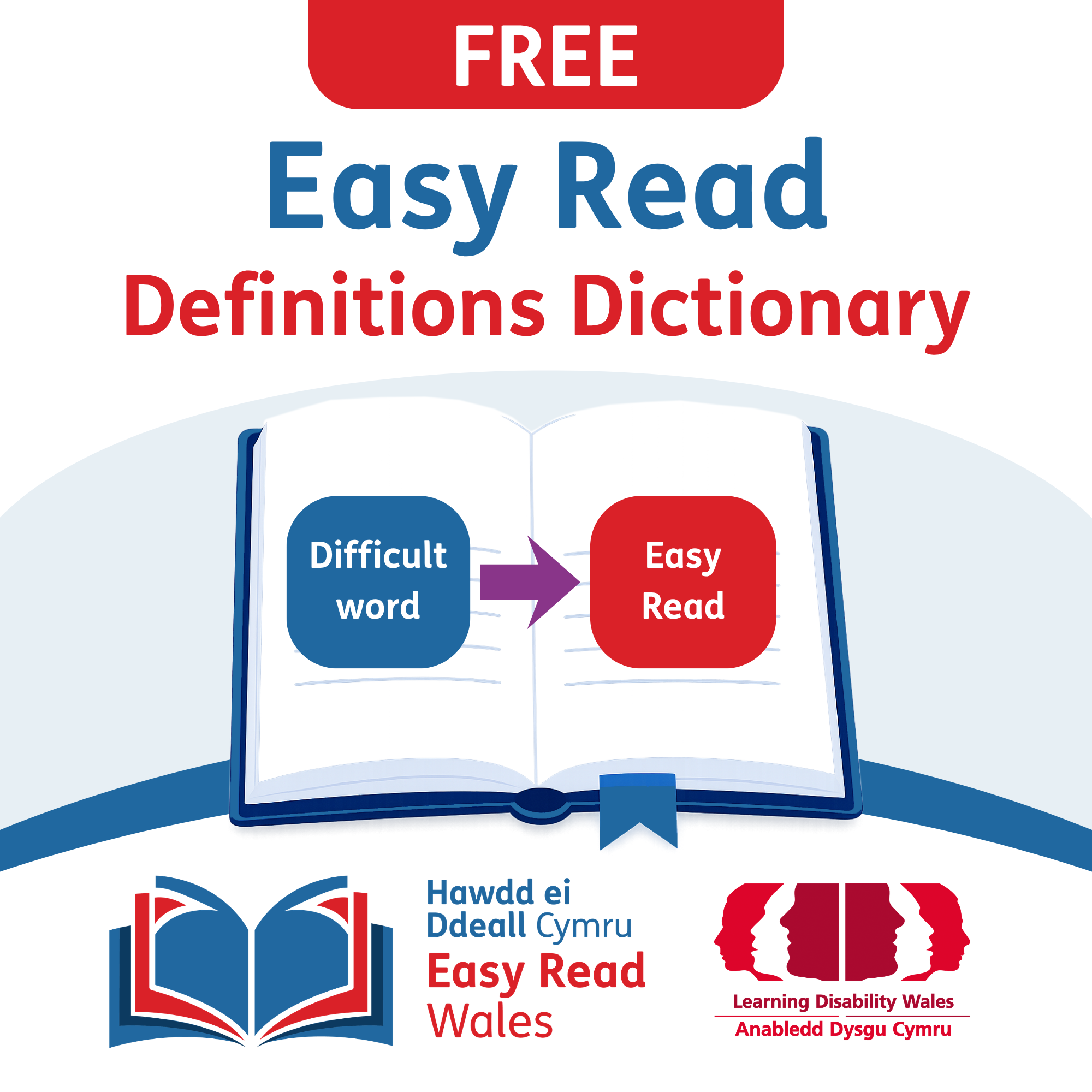
Creating Easy Read documents? Use our free Definitions Dictionary
By Rhian McDonnell
Have you ever tried to explain a difficult word in Easy Read, and found it gets more confusing?
Writing accessible information is not just about shortening sentences or replacing long words. The language you use can affect how well someone:
- Understands important information.
- Feels confident making decisions.
- Can use services independently.
- Feels included and respected.
Small changes in wording can make a big difference.
At Easy Read Wales, we create high quality Easy Read documents for organisations across the UK. We work across healthcare, public services, rights, housing, consultations, and more. We know that explaining difficult words in a way that is accurate, respectful, and easy to understand is not always simple.
That’s why we created our free Easy Read Definitions Dictionary.
It’s an Easy Read glossary designed to help you write clearer Easy Read information. It uses explanations that are simple and practical to use in real documents.
Why good Easy Read definitions matter
Under the Equality Act 2010, organisations must provide accessible information for disabled people.
However, accessible information is not just about meeting legal requirements. It’s about making sure people can actually understand what you are saying.
When information is unclear, people may struggle to:
- Access healthcare.
- Understand their rights.
- Make informed decisions.
For people with a learning disability, unclear language can create real barriers. Clear Easy Read definitions help reduce those barriers. They make information more inclusive and useful for the people who need it.
Good Easy Read says: This information is for you.
Why difficult words are a challenge in Easy Read
Easy Read uses clear language and short sentences, but even in well written Easy Read information, some words are difficult to avoid. This is especially true when writing about complex topics like:
- Health and social care.
- Public services.
- Equality and human rights.
Many organisations need to include formal or technical terms. This can be because they are important to the meaning of the information.
We also cannot change some words because readers will see them in their everyday lives and need to understand what they mean. The challenge is making sure you explain those words clearly.
Sometimes definitions can accidentally make things harder. Poor Easy Read definitions might:
- Include new jargon.
- Become too long and detailed.
- Lose the original meaning.
- Confuse the reader instead of helping them.
Without clear guidance, a definition can end up being harder to understand than the original word.
What makes a good Easy Read definition
Writing good Easy Read takes skill, care and experience.
A strong Easy Read definition should:
Use everyday language
Avoid jargon, technical terms and abstract wording.
Be short and clear
Easy Read works best when information is direct and easy to follow.
Keep the meaning accurate
Simplifying language must not change the meaning.
Avoid introducing new difficult words
Definitions should reduce confusion, not add to it.
Be respectful and inclusive
Language should support dignity and understanding.
Be tested and reviewed
The best Easy Read improves through feedback and lived experience.
Here’s an example of a definition for equality that we regularly use:
Equality means treating people fairly and making sure they have the same chances in life.
This definition works well because it:
- Uses simple, familiar language.
- Avoids unnecessary complexity.
- Keeps the meaning clear.
What our free Definitions Dictionary includes
Our Easy Read definitions dictionary is a free practical resource designed to help you create clearer Easy Read content. The dictionary includes:
- An A–Z list of commonly used Easy Read Hard Words.
- Clear definitions written in simple accessible language.
- Definitions developed through real Easy Read projects.
- Input shaped by lived experience and user feedback.
- A digital accessible format for screen readers.
- A Welsh language version.
It’s designed to support anyone creating accessible information, including:
- Communications teams.
- Accessibility professionals.
- NHS and healthcare organisations.
- Councils and public bodies.
- Charities and third sector organisations.
- Anyone writing Easy Read information!
If you’re creating your first Easy Read document or working on accessibility every day, our dictionary can help you.
How to use the Definitions Dictionary
We designed the dictionary to be simple and easy to use. You can:
- Scroll through the page to browse all definitions.
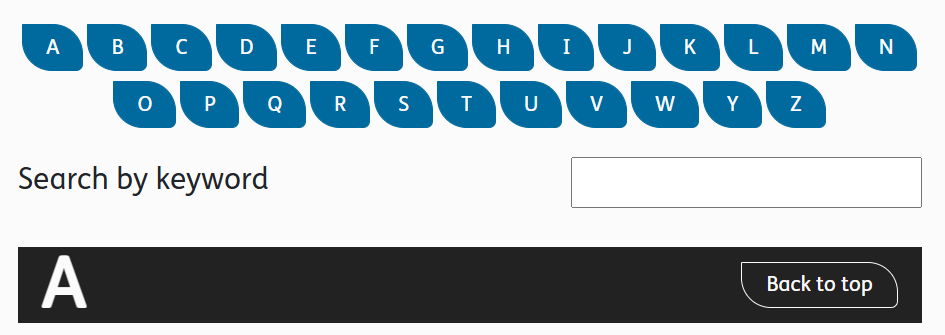
- Use the blue letter buttons to jump to words starting with a specific letter.
- Search for a word using the ‘Search by keyword’ search box.
When using definitions in your Easy Read information, we recommend:
- Making the difficult word bold.
- Add the definition straight after it when the word first appears. For example:
We want to make sure that equality is part of our work. Equality means treating people fairly and making sure they have the same chances in life.
This helps readers understand the word as soon as they first encounter it.
You can also include a Hard Words list in your document.
This gives readers a quick place to check all meanings in one section. However, you should only use this list alongside definitions in the main document, not instead of them.
You can see an example of a document with a Hard Words list here.
You do not always need to include a separate list. Some people find them useful, but it’s important to check with your readers and think about what works best for them.
The benefits of using trusted Easy Read definitions
Creating definitions from scratch for every document takes time. It can lead to inconsistency between documents within an organisation. If you’re creating:
- Accessible public information.
- Consultation materials.
- Service user communications.
- Reports or policy documents.
- Or any Easy Read content.
Using the dictionary can help you:
Improve accessibility
Information becomes easier for people with a learning disability and others to understand.
Save time
You don’t need to rewrite commonly used definitions for every document.
Increase confidence
You can use wording that we have tested and refined through real Easy Read work.
Support inclusion and participation
People can better understand information and take part in decisions that affect their lives.
Deliver better public communication
Clearer information leads to better engagement and understanding.
Adapting definitions
Sometimes definitions need small changes depending on the audience, subject, or tone of the document. For example, a healthcare document may need slightly different wording from a housing document. This helps ensure the information is as useful and relevant as possible.
Starting from a trusted dictionary definition gives a reliable base that you can then adapt, making the process faster and easier.
A resource that keeps evolving
We make Easy Read resources with real-world use in mind, and we know that language changes over time. We regularly review and update our dictionary to help keep definitions relevant and inclusive.
We also believe the best accessibility work comes from listening. That’s why feedback from people with a learning disability is so important to us. We also value input from people working in accessibility and inclusion.
If you have suggestions or ideas about the dictionary, you can email us at: [email protected].
Start using clearer Easy Read definitions today
Accessible communication helps people understand information, make decisions, and take part in life.
Our free Definitions Dictionary is a practical tool to help you create Easy Read content that is simpler and clearer.
If you work in healthcare, government, education, housing, the charity sector, or communications, we hope it’s helpful for you and your team.
Visit our free Definitions Dictionary here.
If you find it useful, please share it with your colleagues and accessibility teams. You can also share it with anyone working to make information clearer and more inclusive. Thank you.

 English
  Welsh
Welsh